Focus Outlook

Top Pathology Solution Providers 2025

Revolutionizing Diagnostics for Better Healthcare

In the intricate web of modern healthcare, pathology stands as a cornerstone. Accurate diagnosis is the foundation for effective treatment, and pathology solution providers are transforming this critical domain with cutting-edge technologies and innovative practices. From automating routine tasks to advancing precision medicine, these providers are redefining what’s possible in diagnostics.

Pathology has come a long way from manual slides and microscopes to digital pathology and AI-driven insights. Today’s solution providers are integrating advanced tools such as image analysis software, cloud storage for secure data sharing, and machine learning algorithms to enhance diagnostic accuracy. This evolution is not only increasing efficiency but also enabling earlier detection of diseases, which is key to better patient outcomes. Moreover, the integration of telepathology ensures that specialists can collaborate across the globe, breaking geographical barriers and facilitating real-time consultations.

Pathology solution providers are stepping up by offering scalable and secure systems designed to meet the diverse needs of healthcare institutions. Their commitment to delivering cost-effective and user friendly solutions is bridging the gap between traditional practices and future-ready diagnostics.

By empowering healthcare professionals with robust tools, pathology solution providers are not just enhancing workflows but also building a future where personalized medicine and precision diagnostics become the norm. With a focus on quality, accessibility, and innovation, these companies are ensuring that every diagnostic decision is backed by accuracy and insight, ultimately elevating the standards of patient care globally.

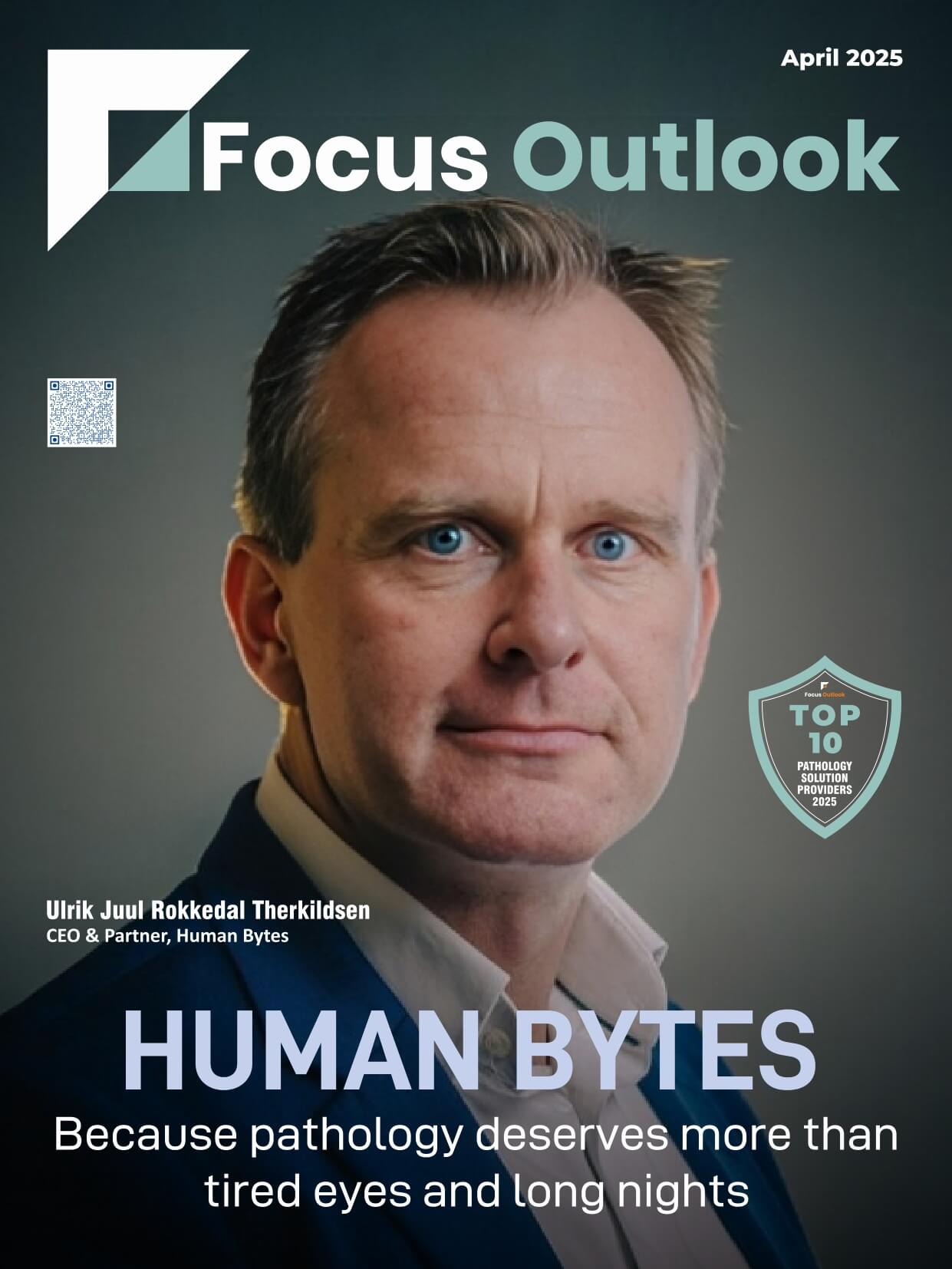
Cover Story

Because pathology deserves more than tired eyes and long nights

ULRIK JUUL ROKKEDAL THERKILDSEN
CEO & Partner, Human Bytes


Pathology keeps changing, but not always in ways the world notices. Most people still imagine a microscope, a slide and a quiet room where someone highly trained tries to make sense of patterns the rest of us would miss. That picture is still true, but the pressure around it has grown. More cases. More complex biomarkers. More urgency from clinicians who want answers for patients faster than ever. And fewer pathologists than the system needs.

Featured Innovators

The Future of Pathology Is Not Coming. It’s Here


NextGen Pathology is changing how hospitals think about diagnostic care. For years, smaller and community hospitals have struggled to get access to the same level of pathology expertise that big academic centers take for granted. That gap has real consequences, delays in diagnosis, limited subspecialty insight, and extra strain on already stretched lab teams. NextGen saw this as more than a technology problem. It’s a people problem, a systems problem, and an opportunity to build something that genuinely supports hospitals where it matters most.

Finally, software that understands your lab isn’t a maze.


Pathology teams deal with more pressure than most people realize. Results need to be fast, clean, and accurate because patient decisions depend on them. But behind the scenes, labs struggle with scattered workflows, outdated systems, and constant back-and-forth that slows everything down. That’s why many providers now look for digital partners who actually understand how real labs work, not just how software works. AdvancedMD fits neatly into that space, giving pathology practices a system that finally feels like it was built with their day-to-day reality in mind.

The lab’s new favorite coworker (who never gets tired)


Mindpeak sits in a space that has been waiting for change for a long time. Pathology has always depended on sharp eyes, steady hands and years of experience. But labs today face a different kind of pressure. Caseloads keep rising. Cancer diagnostics keep getting more complex. And the number of trained pathologists is not growing at the same pace. Anyone who has spent time in this field knows how real that gap feels.