


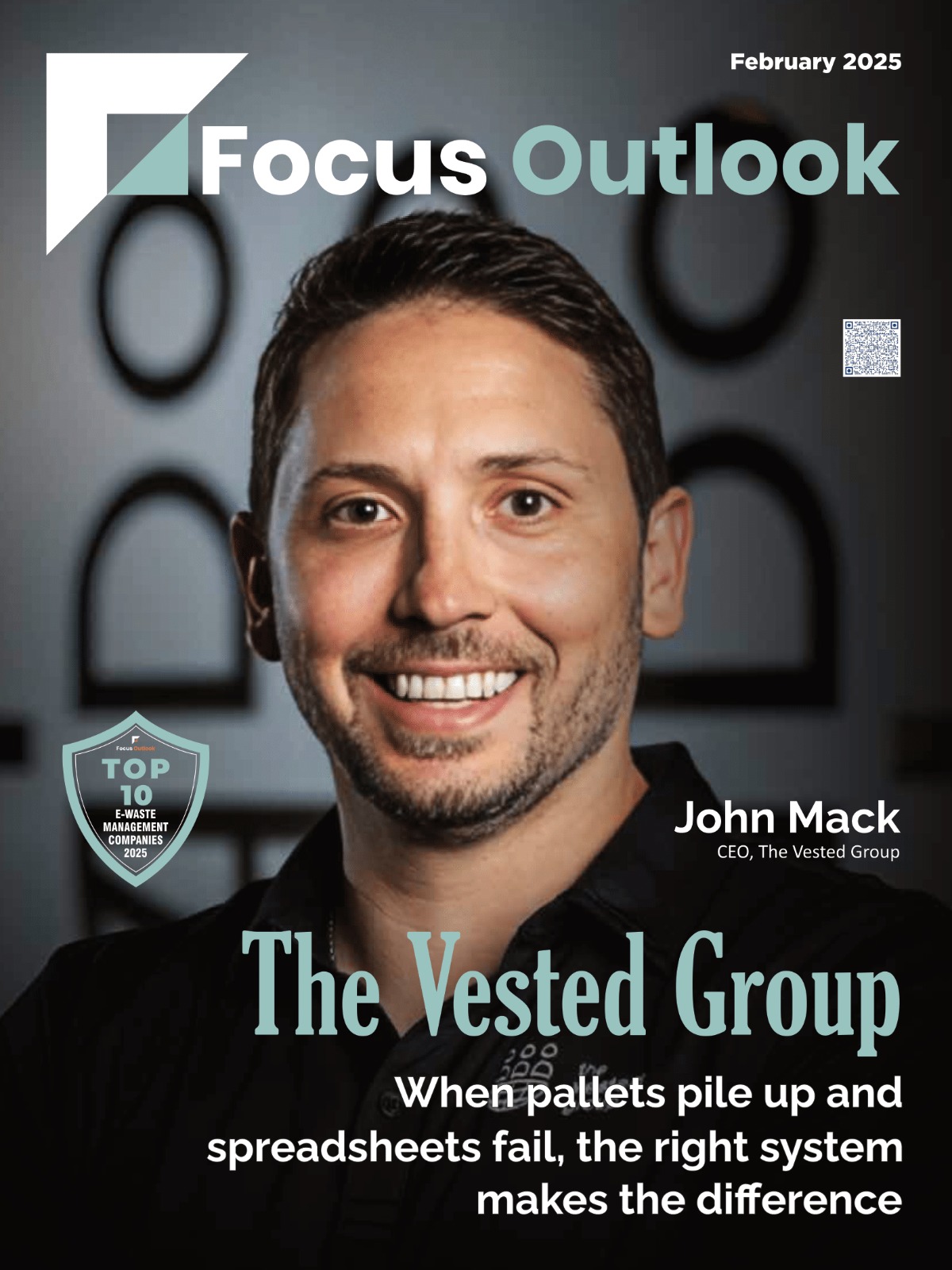
E-waste management rarely gets described as elegant work. It is operationally heavy, process-driven, and full of moving parts that do not always line up neatly. Devices arrive in bulk, often undocumented. Value changes fast. Compliance rules keep shifting. Data security leaves no room for error. Behind all of this, there is a simple truth most people in the industry learn early on. If your systems are weak, everything else cracks. This is where technology stops being a support function and starts becoming the backbone. And this is where The Vested Group fits into the e-waste management conversation, not as a recycler on the floor, but as a company building the systems that keep modern ITAD and electronics recycling businesses running cleanly, predictably, and at scale.
Based in Texas, The Vested Group has spent years working deep inside operational businesses, especially those that outgrow spreadsheets and disconnected tools faster than expected. While the company is widely known as a specialist in enterprise software implementation, its relevance to e-waste management comes from a very specific understanding of how IT asset disposition companies actually work once the trucks arrive and the pallets start stacking up. This is not theory. This is workflow reality. Incoming equipment needs to be logged, triaged, audited, tracked, repaired, sold, recycled, and reported on, often across multiple facilities and partners. Miss one step and margins suffer. Miss two and compliance risks creep in quietly.
Most e-waste companies do not fail because demand disappears. They struggle because operations get messy faster than leadership expects. Inventory visibility breaks down. Financial settlements take too long. Data destruction records live in one system, resale data in another, and warehouse movement in yet another. The Vested Group recognized this pattern early on while working with businesses that lived at the intersection of physical assets and complex back-office processes. Rather than forcing these companies to bend around generic ERP tools, the firm took a different route. It built a purpose-designed solution on top of NetSuite that reflects how e-waste and ITAD operations really flow from start to finish.
That solution, known as reVESTED, sits quietly behind many electronics recycling and ITAD businesses doing the unglamorous work that actually matters. It connects agreements, inventory, audits, refurb workflows, warehouse movement, and financial settlement into a single operating view. Not a perfect view. A usable one. One that operators can trust when volumes spike or when auditors ask uncomfortable questions. One that finance teams rely on when reconciling value recovery against processing costs. One that leadership teams lean on when deciding whether growth is sustainable or just expensive.
What makes this approach work is not just the software. It is the way The Vested Group understands the industry’s pressure points. In e-waste, nothing arrives cleanly labeled. Devices show up in mixed conditions, mixed generations, and mixed value states. Triage is not a checkbox. It is a judgment process. Systems need to support that reality, not flatten it. reVESTED allows teams to record condition data quickly, route items intelligently, and make decisions that balance speed with recovery value. That sounds simple on paper. In practice, it is where many generic systems fall apart.
Refurbishment and repair introduce another layer of complexity. Work orders change. Parts availability fluctuates. Not every device deserves the same effort. Some should move straight to material recovery. Others justify deeper refurbishment. The Vested Group’s approach supports this kind of decision-making without forcing teams into rigid templates. You can see what is happening, where it is happening, and why it is happening, without needing five different reports stitched together manually.
Warehouse management is where things either stabilize or spiral. E-waste warehouses are not neat rows of identical SKUs. They are dynamic environments filled with varied equipment, shifting priorities, and constant movement. The Vested Group built systems that treat the warehouse as a living operation rather than a static storage problem. Inventory locations matter. Status changes matter. Timing matters. When resale, recycling, and downstream partners depend on accurate data, even small delays compound fast.
One place where the value of strong systems becomes especially clear is in agreements and settlements. Many e-waste and ITAD businesses operate under complex contractual terms with clients, partners, and vendors. Revenue is rarely straightforward. It depends on condition outcomes, resale channels, material recovery rates, and agreed-upon splits. reVESTED brings these agreements into the core system instead of leaving them buried in PDFs and emails. Settlements calculate faster. Disputes reduce. Trust improves, both internally and externally.
It is worth pausing here to make something clear. The Vested Group does not position itself as an environmental company in the traditional sense. It does not process devices or shred drives. Its contribution sits one layer back, in the systems that allow e-waste companies to operate responsibly at scale. That distinction matters. Sustainability in this industry is not just about what happens to a device. It is about whether companies can afford to do the right thing consistently without collapsing under operational weight.
Over the years, The Vested Group has built a reputation for understanding where ERP theory meets operational reality. Recognition such as repeated inclusion on the Inc. 5000 list did not come from flashy marketing. It came from long-term client relationships and solutions that continue working after the initial implementation excitement fades. In the e-waste and ITAD space, that staying power matters more than most people admit. Systems live or die not in demos, but on busy warehouse floors and month-end close calls.
Another understated part of the company’s role is culture. The Vested Group invests heavily in its people, not as a branding exercise, but because complex industries require consultants who listen before they configure. E-waste businesses do not need abstract best practices. They need partners who understand why shortcuts appear tempting and why they usually backfire. That kind of understanding only comes from repeated exposure to real operations, real mistakes, and real fixes.
Looking ahead, the pressure on e-waste management companies will not ease. Volumes will rise. Regulations will tighten. Clients will ask harder questions about data security, traceability, and environmental impact. In that environment, software that merely records transactions will not be enough. Companies will need systems that help them think clearly about their operations while things are moving fast. This is where The Vested Group’s work continues to matter, even if it stays mostly behind the scenes.
There is a quiet confidence in building tools that let other companies do their jobs better without demanding attention. The Vested Group has chosen that path. By focusing on how e-waste and ITAD businesses actually operate, rather than how software vendors wish they operated, the firm has secured a place in the industry that feels durable. Not flashy. Not loud. Just useful, which in this space is often the highest compliment.
In the broader picture of e-waste management companies, The Vested Group represents a different kind of player. One that proves sustainability and efficiency often start with systems that work as hard as the people using them. Not perfect systems. Honest ones. The kind built by teams who understand that real operations rarely follow straight lines, and that is exactly why they need support that does not break when things get complicated.

© 2026 Focus Outlook