


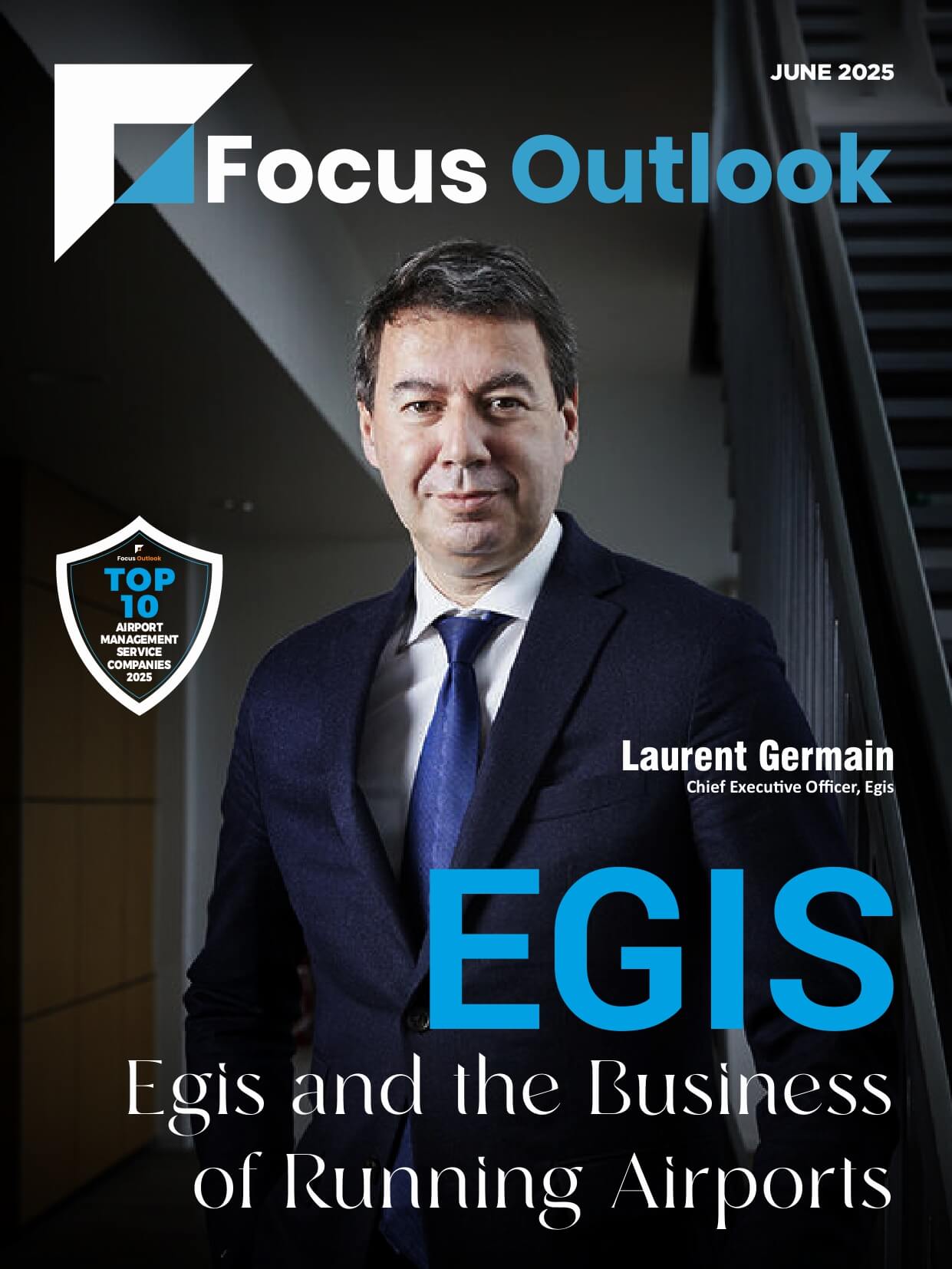
Egis isn’t new to infrastructure. Based in Guyancourt, France, it’s been shaping the built world for decades; bridges, highways, tunnels, rail. But when it comes to airport management, Egis does something a bit different. It doesn’t just consult from the sidelines. It rolls up its sleeves and gets involved. Actually runs airports. And that’s what sets the company apart in an industry where many stick to planning and advising.
You’ll often hear people say Egis wears two hats. On one hand, it’s a globally recognised engineering consultancy. On the other, it’s a seasoned airport operator managing a diverse group of mid-sized airports around the world. But it’s more accurate to say Egis doesn’t switch hats at all; it blends the two roles. The operational experience feeds the consulting work. The consulting knowledge sharpens the day-to-day running of airports. One reinforces the other. Which means the company isn’t just designing ideas for other people to test. It’s testing those ideas itself, in real airports, with real consequences.
That kind of setup changes how you think about efficiency. It means you see what actually works instead of what looks good on a slide. And over time, that sharpens your instincts.
Right now, Egis has a hand in managing about 20 airports across eight countries. Places like Brest and Pau in France. Ostend and Antwerp in Belgium. Larnaka and Pafos in Cyprus. Airports in Congo, Côte d’Ivoire, French Polynesia, and Brazil too. Each has its own complexity. Some are domestic hubs with modest traffic. Others are tourist-heavy. A few are strategically important to national governments. Egis doesn’t treat them the same. It leans into the context. And that flexibility; while still applying a high level of technical rigor; is one of the reasons why authorities bring them on board.
In some locations, Egis takes full management responsibility. In others, it might focus on specific pieces; consulting on security upgrades, building sustainability plans, or developing new passenger routes. It even seconds leadership teams to partner airports, embedding their executives to support day-to-day operations. That’s a level of involvement that goes beyond traditional consulting.
And it pays off. Airports get more than theory. They get practical systems that hold up under pressure. The kind that can respond to a staffing shortage on a Monday morning, or deal with a broken baggage carousel mid-shift, without throwing everything off. Because the people behind those systems have already lived through that chaos somewhere else.
What’s more, Egis has been building some seriously smart tech into these operations. One example is Smartvigie Airport. It’s a digital platform built to streamline how airport teams report incidents and anomalies; anything from a blocked access point to a malfunctioning light on the tarmac. The idea is simple: someone spots an issue, they log it using a tablet, and the system routes it to the right team for follow-up. No paper trails. No unnecessary calls. Just clear accountability and fast action. It’s not flashy. But it gets the job done, and that’s the point.
If you’ve spent time in airport operations, you know the small problems pile up. Fixing them quickly keeps the whole ecosystem running. Tools like this are part of why Egis has managed to grow its airport portfolio without compromising service levels.
Still, technology alone doesn’t drive performance. People do. And Egis understands that. It invests in on-site training, performance metrics, and leadership development to strengthen operational teams at the local level. It doesn’t drop in a template and hope it fits. It adjusts. That attention to nuance is what makes them good at what they do.
Financially, they’re no slouch either. Egis brings a strong background in PPP structuring and project finance. That matters a lot in airports, where capital investments are massive and returns stretch over decades. Governments want partners who understand risk allocation, compliance, and long-term forecasting. Egis knows how to build models that work for public-sector owners and private stakeholders alike.
You’ll also see them involved in master planning and infrastructure expansion; helping airports figure out how to scale up without losing control. They’ve worked on runway extensions, new terminal buildings, and even air traffic redesigns in some regions. And because they operate airports themselves, they don’t fall into the trap of overdesigning. They know when something sounds good on paper but doesn’t hold up at peak season with 3,000 passengers moving through arrivals.
Sustainability is another area where Egis pushes forward. Not in a marketing sense, but in the way they approach emissions, waste, and energy use. They’ve been helping airports develop net-zero strategies, electrify ground operations, and rethink how terminal buildings consume energy. There’s still a long way to go industry-wide, but Egis isn’t waiting around. They treat sustainability as part of the job, not an extra.
This is where the bullet points make sense; just once. Egis brings a full spectrum of services to airport management, including:
Most firms specialise in a handful of these areas. Egis offers all of them under one roof. Not as an all-in-one package, but as a modular system that adapts to what each airport needs. If you’re a regional government trying to revamp an aging airport, or a private operator scaling up a new terminal, that kind of versatility matters.
Now, no company is flawless. Egis has had its share of controversy. In 2024, it was part of an IDB debarment, along with a few affiliated entities, following allegations of misconduct related to international contracts. Those matters are under review, and it’s something airport owners and public agencies keep an eye on. Especially in sectors like aviation where transparency is non-negotiable. But it’s worth noting that the company continues to land major contracts, suggesting the market still trusts its operational strengths.
Today, Egis is owned by a mix of private equity (Tikehau Capital), French sovereign interests (Caisse des Dépôts), and employee shareholders. That ownership blend gives it both the funding depth and the stability to take on long-term infrastructure plays. According to the latest numbers, Egis operates in more than 120 countries, employs over 20,000 people, and brought in more than €2 billion in revenue. It ranks among the top engineering and transport firms globally, and even higher in aviation-specific rankings.
But all the stats aside, what defines Egis in the airport space is its mindset. It doesn’t just manage runways and terminals. It manages complexity. People. Pressure. Uncertainty. The airport industry runs on tight timelines and even tighter margins. Mistakes ripple fast. Good management means staying five moves ahead; and having a team that knows what to do when something goes sideways.
That’s what Egis brings. The experience to think long-term. The focus to handle the details. And the drive to keep making airports work better, one terminal at a time.

© 2026 Focus Outlook